

Leadership
Crighton Brings the Lessons of Lynn to His Work on Beacon Hill
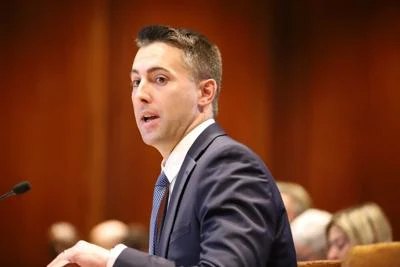
It’s fair to say that Brendan Crighton did indeed come out of Lynn different than the way he went in. He came out way better.
Strictly speaking, he never came out of Lynn in any sense — he’s lived almost all of his life in his home city, the heart of his senatorial district. And it certainly never came out of him — he’s the embodiment of his hometown, or at least one part of its rainbow of ethnicities.
“Miss Nishan, my fourth grade teacher, spoke to us about the phrase ‘melting pot,’” he recalls. “And she talked about how, ‘Look around, look to your left, to your right. Everyone’s a different color, a different race, like from different places.’
“And she really stresses that this will be an advantage. This is going to be a strength that when you get older, other people may not have had. And that actually stuck with me forever.”
As senator, he has to represent both the central city and the vastly different suburban seashore enclaves to the North, but when he says, “I’m a Lynn guy,” he means it, and it’s borne out in every facet of his resume and drives much of what he does at the State House.
Sleekly dressed, fit, affable, he does not present in his early 40s like someone who scuffled as a teen. As is often the case with promising kids from gritty cities, sports changed the trajectory of Crighton’s life. “I attribute it to my coaches, like they definitely helped me kind of mature in the sense of realizing that like the benefit of hard work and how fulfilling that can be,” he says.
The diversity, and disparities, of what’s now his district put him and his teammates in a bad place during Pop Warner and high school football seasons. On one hand, he was surrounded by really intimidating characters and situations in his own city, never mind the challenges of learning the game.
On the other hand, being from Lynn meant being automatically looked down upon by outsiders. “I mean, there were some teams that wouldn’t come to Lynn to play us. There was one team that refused to come for our home game. We had to go play at their facility because they refused to come to Lynn, which is … yeah.”
Out of that background he developed the same sort of defiant, almost ironic pride expressed by Dolly Parton about her own, infinitely dissimilar, native place: Crighton’s prouder of his city than he would be if it had a good reputation. “It definitely was like all right, yeah, this is who we are. We’re proud of who we are, and … it changed my identity in that sense.”
Everyone in his life history seems to have lived in Lynn their whole lives — his parents, grandparents, mentors. His grandfather worked at “the GE,” as residents call the iconic Lynn aerospace plant. His dad was the first in the family to go to college, and became a pharmacist. His mom went to Middlesex Community College; she’s an occupational therapist.
He was accepted at Colby College, a huge culture shift, another environment where football kept him on track. “I went there saying I’m going to try to play, try to make the football team … but kind of brought with me I think that sense that, we’re better than people think we are.”
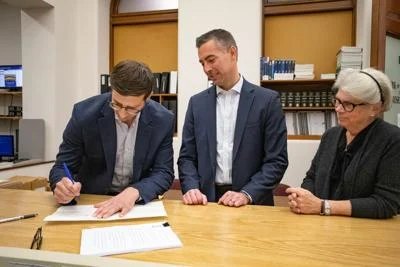
And then he found politics, or more precisely, it found him. His family wasn’t political exactly — THE political family in Lynn was the McGees, where Tom Sr. was speaker of the House and his son Tom was destined to follow him in public life, as rep, then senator (preceding Crighton), then mayor of Lynn. What the Crightons did do was help their friends, including the ones running for office, and that meant Brendan was knocking on doors for his Dad’s city councilor pal Ricky Ford when he was just a teen.
At Colby he wasn’t the best student, but studying government ignited the sense that he could find ways to improve the life of the hometown he loved. He learned public service on the job, by doing it. He got an internship his junior year with Mayor Chip Clancy, another friend of his father, who was also Lynn’s state senator.
“I can’t believe how ignorant I was,” Crighton recalls. And as it turned out, public service wasn’t something you learned from a book.
The internship was one where “you didn’t have a ton of specific duties, but kind of absorbed what it was like to be in political office, but also one that’s just like constituent services day in and day out,” Crighton relates. And Clancy showed him why you didn’t need a textbook.
“He walked around with a notepad in his pocket, like the old school politicians did. Everywhere he went, someone would come to him and ask him [for assistance], and he would pull out his thing and write it down, not just say, ‘yeah, we’ll get to that.’ And I think at some point he kind of coached me up on that. It’s just like always, be ready to help someone, but be prepared [to follow through].”
The Clancy experience and his family’s network left him grounded enough to land a spot on McGee’s staff as legislative aide, another job to which he brought complete cluelessness about the technicalities and a complete devotion to learning by serving.
“It’s embarrassing how little I knew. Like I love Tom McGee to death, and he’s one of my closest friends and mentors — and I don’t know why he hired me.”
Work ethic, quite possibly, is the answer: “I just learned a ton and just absorbed everything. And once I got the confidence to kind of ask, you know, for additional tasks, I would just say, ‘can I come with you to this event?’ And he gave me the opportunity to say, ‘All right, on this day, I’m going to be in the district. Meet me at this event,’ or then start to say, ‘hey, I can’t be there,’ and started staffing things myself, like common things that legislative aides did. But I just became kind of obsessed with that part of it.”
And how well did this on-the-job approach work out? He’s had an unbroken, and now lengthy, record of constant success: City Council in 2010, Mass. House in 2015, and by the time McGee left his Senate seat to become mayor in 2018, Crighton was so well-regarded by his constituents that he drew no opponents in the Democratic primary to fill the vacancy.
This success was grounded not just in his network but the policy lessons he learned, again, hands-on, as McGee’s aide. “There was a ton of cool things going on in Lynn,” Crighton recalls. He contributed to a pivotal study on development of the Lynn waterfront, and “I remember when the report came out, it had a steering committee and it included my name on it. I was like, oh wow, that’s freaking great. Not that I contributed much, but like, I was there on behalf of Tom [McGee], and like, I’m part of this thing that’s gonna transform our waterfront.”
On the City Council, he “stole every idea I came across,” drawing from the efforts of Kim Driscoll, then mayor of Salem, Adam Baacke, now head of the state Division of Capital Planning and Operation but then city planner in Lowell, and the urban scientists at MassINC. And it wasn’t that long before he made the connection between affordable housing — the paucity of affordable housing, that is — and restrictive zoning ordinances.
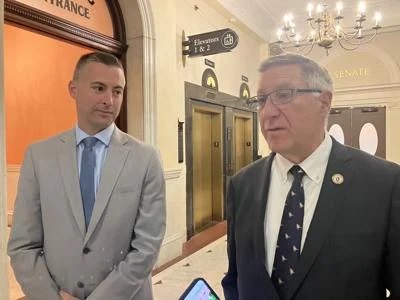
Understanding the fundamental role restrictive zoning plays in blocking new affordable construction, and on his way to chairing the Transportation Committee in the Senate, Crighton developed the MBTA Communities Act, passed in the 2021 economic development bill. It ties state aid to affordable housing in places served by public transit, and it drives the debate about how much change communities are willing to accept.
That law doesn’t only seek to leverage the potential of public transit, it speaks to Crighton’s lifelong sensitivity to unfairness, and his interest in leveling the playing field. The makeup of his district means he has to relate to vastly different groups of people, from the public housing projects of Lynn to the seaside mansions of Marblehead. To do that, he says he calls on lessons he learned long ago in school.
“Every classroom I was ever in, every team I was ever on, you could have people that lived in more like a single-family home district, or you could have people that grew up in public housing. And we were, you know, in the middle of that,” he recalls. “It was definitely a benefit that you had all walks of life.”